Words are wind
A Clash of Kings“Words are wind” is a saying about the fragility of speech, but its appearances make that fragility paradoxical. Words may vanish like air when unsupported by action, yet names, commands, vows, riddles, and declarations repeatedly exert material power. The expression therefore becomes less a simple rejection of language than a test: speech is empty when it evades responsibility, and consequential when someone gives it force through conduct.
Meaning and First Use
The clearest formulation comes from Davos Seaworth after his mission to win support for Stannis Baratheon. The lords he approached offered “soft words,” blunt refusals, excuses, promises, and lies; after recounting their evasions, he reduces the whole performance to the judgment that “In the end words are just wind.” His conclusion is not that truth is unavailable, but that political speech without commitment cannot sustain hope. When Cressen asks whether he could bring Stannis any hope, Davos distinguishes honest truth from the false kind: he refused to offer comfort that action could not support.
The saying thus establishes a moral contrast between speech and accountability. Davos’s words are severe because they report failure plainly, while the opposing lords’ words have failed because they were instruments of delay. The expression carries the authority of someone who has acted and returned with an unwelcome answer, rather than someone using skepticism to avoid action himself.
Speech as Political Power
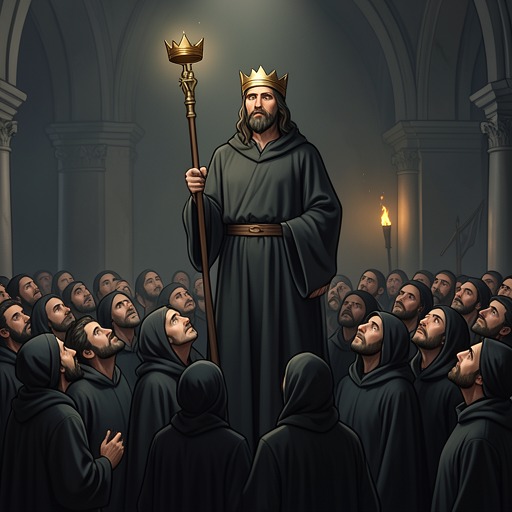
The expression’s meaning is complicated by Varys’s riddle to Tyrion Lannister. Varys describes a king, a priest, and a rich man ordering a common-born sellsword to kill the others, each invoking a different source of authority: lawful rule, divine command, or gold. The riddle asks who lives and who dies, and its implied answer places the decisive power not in the grand speeches of the rulers but in the person who chooses whether to obey.
Yet the riddle also demonstrates that words are not merely insubstantial. The king’s command, the priest’s religious appeal, and the rich man’s promise of payment all attempt to convert language into violence. Their speech has no guaranteed force, but it establishes the terms within which force may be exercised. Tyrion’s answer—that the outcome depends on the sellsword—makes the principle explicit: authority exists only when another person recognizes or enacts it. Varys’s verbal puzzle therefore turns the saying inward, showing both the weakness of unsupported claims and the danger of words backed by power.
Ritual, Naming, and Binding Speech
The expression stands in sharp contrast to the language of the Drowned God’s rebirth ritual. Aeron Greyjoy pours seawater over Theon Greyjoy and asks whether he still knows the words. Theon answers, “What is dead may never die,” and Aeron completes the formula by declaring that what is dead rises again “harder and stronger.” Here speech is not presented as wind. The words mark a transformation, place Theon within a religious tradition, and publicly define the identity he is expected to inhabit.
The ritual shows that language can function as an act rather than a report. Aeron’s commands, the seawater, and Theon’s repeated response work together; neither the physical gesture nor the words alone carries the whole meaning. The phrase becomes effective because it is spoken in a formal setting and answered by the participant. At the same time, the scene preserves tension between ritual declaration and personal purpose: Theon kneels because he needs Aeron’s help and believes a crown is worth the humiliation. The words create an outward identity even as his private motives remain political.
Other speech acts in the narrative similarly expose the difference between saying and doing. Stannis Baratheon corrects Cressen’s address when Cressen calls him “Lord Stannis,” insisting on the title “King Stannis.” Renly Baratheon later greets him as “King Renly,” turning rival claims into a contest over naming. These brief exchanges show that a title may be only a word, but it is also a public claim to legitimacy, obedience, and rule. The conflict between the brothers is therefore fought through language before it is fought through armies.
Silence, Insult, and Authority
At Winterfell, Theon raises his hands and begins by asserting, “You all know me—,” but Mikken interrupts with an insult and is beaten by an ironman. Theon’s attempt to establish authority is cut off before it can become persuasion. Bran Stark then orders Mikken to be silent, trying to imitate Robb Stark’s stern command, but his voice betrays his youth and emerges as a shrill squeak.
This scene gives the expression a physical dimension. Speech becomes wind when a speaker lacks the power to make others listen, while violence can instantly decide whose words matter. Theon’s authority rests on occupation and threat rather than trust; Bran’s rests on a borrowed model of lordship that his voice cannot yet convincingly perform. The interruption and the beating reveal a hierarchy in which the right to speak is itself contested.
Vows and the Limits of the Saying
The most powerful counterexample to “Words are wind” is Jon Snow’s recitation of the Night’s Watch vows with Qhorin Halfhand. Beneath the rising moon, with Ghost listening, Jon pledges that his watch will last until death; he renounces marriage, lands, children, crowns, and glory, and promises to live and die at his post as “the sword in the darkness” and “the shield that guards the realms of men.” The oath is not casual speech. It imposes a future discipline and defines what Jon must surrender.
The immediate silence after the vows gives them weight. Jon holds the words in his mind and prays for the strength to die bravely, while the failing horses and the dwindling fire make the oath’s mortality concrete. Qhorin’s warning that if the Wall should fall, all the fires will go out, extends the vow beyond personal identity into the survival of the realms. In this setting, words become binding precisely because the speaker accepts consequences that will test them.
The recurring expression therefore does not claim that language is always powerless. It distinguishes between speech that merely fills political space and speech that creates obligation, exposes truth, or announces a claim others must contest. Davos uses it to reject hollow promises; Varys turns it into a question about the source of power; ritual and vows show how words can make identities and futures. The phrase’s lasting force lies in that tension: words are wind when no one will stand behind them, but once embodied in action, they can become command, covenant, or threat.